Post 1 -- Harry Kowalczyk
One of the things that really stood out to me in the book was the last section on graphic design’s roll in propaganda and recruitment posters. I found it interesting that the icon American poster of Uncle Sam saying “I Want You” was actually more or less copied from a British poster earlier in the war.
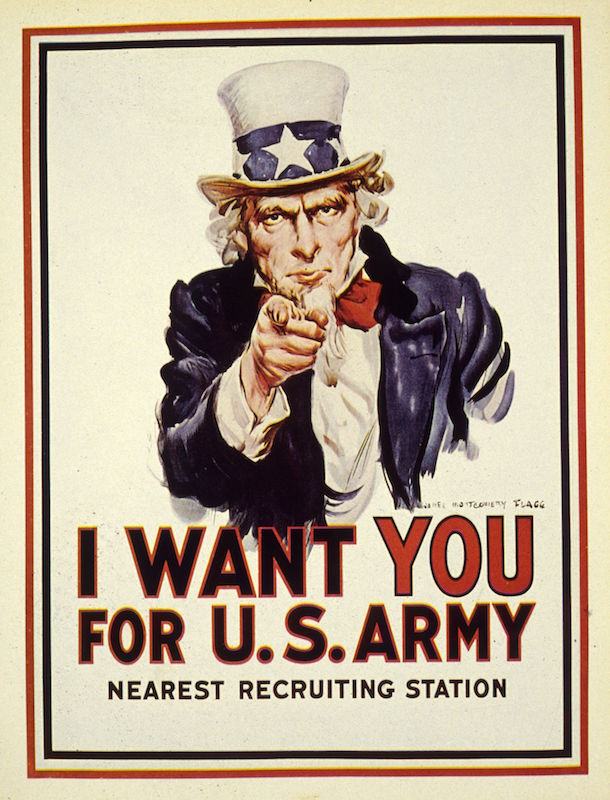 |
| Flagg, J. M. (1917). "I Want You For U.S. Army". Retrieved from URL https://time.com/4725856/uncle-sam-poster-history/ (January 20, 2020). |
It has always interested me to see that, in times of war, the enemy is portrayed as barbaric beasts. The way that this type of characterization was used to evoke anger and hatred from the viewer is a powerful means to get people to support a large war. It makes people feel like the enemy is an uncivilized threat to their way of life. I found another propaganda poster from World War I, in which an ape holding a shocked woman and a bloodied bat stand on the shore of America with a devastated Europe behind it. This image makes one fearful, and that if something is not done now, things will get a lot worse.
 |
| Hopps, H. R. (1917). "Destroy This Mad Brute Enlist" [Lithography]. Received from URL https://en.wikipedia.org/wiki/File:Harry_R._Hopps,_Destroy_this_mad_brute_Enlist_-_U.S._Army,_03216u_edit.jpg (January 20, 2020). |
As someone who enjoys learning about history, I see a lot of similarities in the themes used in the World War I posters in the book and World War II posters I have seen through my own exploration. Similar themes exist in this poster, of Hitler and Tojo looking at America with weapons in their hands, ready to strike. Both this poster and the other WWI poster show the enemy as an immediate threat to America, and that something must be done to keep America safe from these foreign threats.
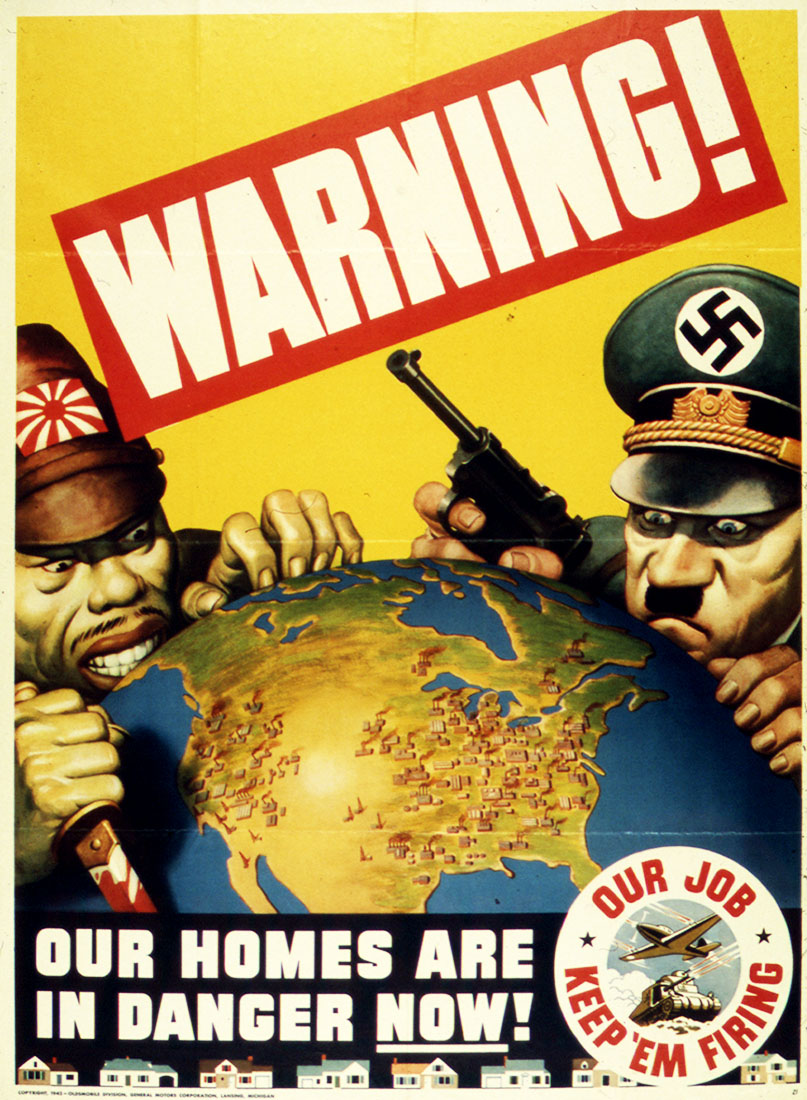 |
| "Warning! Our Homes Are In Danger Now!" [Poster]. Retrieved from URL https://catalog.archives.gov/id/516040 (January 20, 2020). |


This is similar to the takeaway I got from reading the pages as well. I was going to go this route, just decided otherwise. I like how you broke down the way in these posters are effective, as opposed to just presenting them.
ReplyDeleteI agree, it is very interesting to see the similarities between different propoganda posters, despite the fact that they come from different times and support different causes.
ReplyDelete