Week 1 Make up
Something that stuck out to me from this reading was the statement, "The simple figure and minimal text has persisted as the most frequently used combination of word and image." The textbook is referenceing Jules Cheret and how he positioned people and texts based on how it appealed visually rather than based on realism. The most common combination of word and image seems like a simple statement, but it is something I do not think I have taken appropriate time to consider in the past.
It is overwhelming to think of just how many combinations of words and images there are, and in what form they are delivered to us, it seems unimaginable that we can definitively say that there is one most common combination, but it also makes a lot of sense that it would be a person and text. Actually, I feel that way about a lot of statements in this chapter, like "outline is the simplest representation of an object in two dimensions." I realize it is hard for me to separate out my relationship with digital images. What I think of as simple is really not the same for every one.

Rachel Ehrenberg, S. N. (2017, June 4). Square Pixel Inventor Tries to Smooth Things Out. Retrieved January 22, 2020, from https://www.wired.com/2010/06/smoothing-square-pixels/
Really, the digital image is not simple at all, as it has a whole lot of matter to account for imitating. I read an article that claimed this as the first digital image to be created out of a scan of a film photo. Just as people adapted to the world of print from what their eyes saw, I often need to remind myself to adapt my world into images without the filter of the digital or online world. Or maybe consider it in a different way while creating things digitally.
It is also interesting how at the beginning of the second chapter it talks about the Viennese Renaissance and the importance of the square both for decoration and reproduction. The square is sort of like a pixel, but now I think we are in a period much more fascinated with the circle and smoothness.
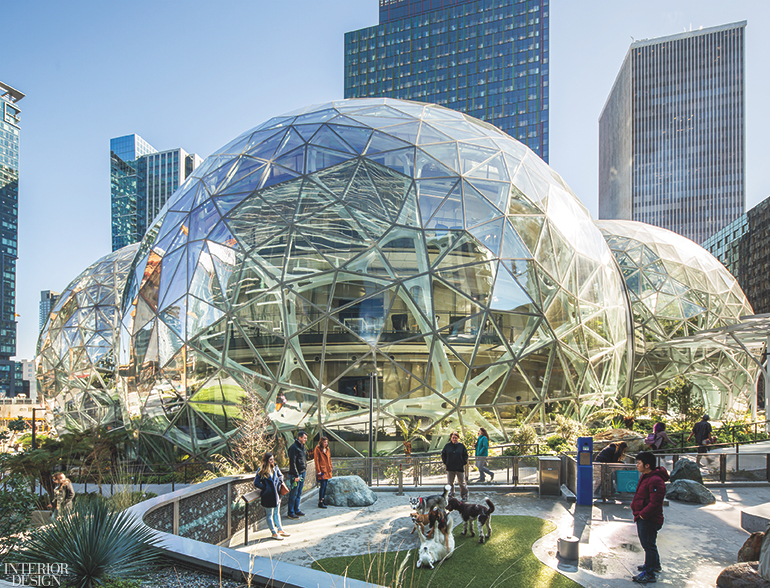
Romano, B. (2019, August 16). Amazon at 25: The magic that changed everything. Retrieved January 22, 2020, from https://www.seattletimes.com/business/amazon/amazon-25-the-magic-that-changed-everything/
When thinking about propaganda posters and how they are effective in their use of metaphor, it is hard not to think of the meaning of the shapes and implications of popular images today.

The Credibility Paradox. (2014, January 31). Retrieved January 22, 2020, from https://geopolicraticus.wordpress.com/2009/02/05/credibility-paradox/


Excellent observations and reflections, lots of possibilities for further research and research topics for your paper if desired.
ReplyDelete